Monday, March 10, 2014

#LETBOOKSBEBOOKS: EFFORTS TO END GENDER STEREOTYPES IN PUBLISHING

Fighting gender stereotypes in publishing has become a hot topic lately, with online petitions and Twitter hastags, #LetBooksBeBooks, generating a lot of incredible thinking and action. I couldn't have planned a better follow-up to my thoughts On Reluctant Readers & Gender Equality in Reading!

The #LetBooksBeBooks movement is about not labeling books for one gender or the other. I can think of almost countless instances where a book cover turned off a reader. The kid whose friends laughingly questioned his choice of reading because the cover was "girly"--that the content was decidedly not "girly" made little difference. I didn't see him reading that book again. This story goes the other way too, with girls not being or feeling included because of their reading choices as well. Some of the stories you'll find on the petition website are a little surprising and sad. Here's a little cover comparison to illustrate the situation for secondary readers:


While I thought these initial two covers for Beth Revis' Trilogy Across the Universe were beautiful, you can see how they would turn off some boy readers. The series, a thrilling futuristic science fiction story taking place on a spaceship among the stars, has two strong protagonists at it's heart--a boy and a girl--and is a great read for everyone. 


The third book in the series was published with the redesigned cover, and the first two were given new covers to complete the set. These new covers definitely make a move to appeal to either gender and, thankfully, don't immediately classify the story as a "girls book" from the first look. I admire this move to make the series appeal to everyone, because I know a lot of readers who would love the series. In this day and age of beautiful and artistic book cover design, "judging a book by its cover" is a worn-out phrase. Because it happens. How much better would it be for reluctant readers to not be turned off a story that would appeal to them because of a cover or label? I can see this opening up a wider world for scores of readers. 

Monday, February 24, 2014

ON RELUCTANT READERS + GENDER EQUALITY IN READING

In studying gender equality in reading lately, I've been examining and questioning how I let gender influence the books that I recommend--and I've come to some interesting conclusions. I wholeheartedly agree on the following things: 
-There are some issues with gender-specific marketing. Why should some books only be marketed to boys, and others to girls? This can influence readers to a great extent--not always a good thing.
-Boys can and do read books marketed for girls or starring female protagonists. They can and should read books that deal with emotional issues--books which sometimes are unfortunately labeled as "girly".
-Reluctant girl readers are underrepresented, especially seeing how much attention reluctant boy readers are given. 
BUT. If you've had any exposure to middle school and older aged kids, you know for certain that at those ages, boys and girls are just different. Biologically even (those poor things and all their hormones). This is probably obvious, but boy readers and girl readers at those ages are wildly different too, especially if they've been classified or see themselves as non-readers.

We can find some fault with societal gender typing, which may change over time with the admirable efforts of writers and readers . . . but it would be sad to miss an opportunity today to get a good book in the hands of a reluctant reader. Reluctant boy readers often reach for books about war, humor, sports, zombies, sports, survival scenarios, biographies, and sports. While it does happen, they're unlikely to venture into Pretty Little Liars territory. So, while making all types of books available to all, it's necessary to allow gender to influence some of the books you recommend. 

The bottom line is this: when finding a book for a reader (reluctant or not) connect them with a book that appeals to their interests and passions. If a boy absolutely loves war stories and combat, don't hesitate to hand him Lone Survivor, but maybe also hand him Divergent. If a girl loves romance stories, give her The Fault In Our Stars, but maybe also Hostage Three. Appeal to their interests, but also use your mighty power in selecting books that can also broaden their perspectives, and introduce them to new tastes.

Thursday, January 16, 2014

SHORT LIST 02: MIDDLE GRADE BOOKS FOR RELUCTANT READERS

I've been meaning to share this for a while, and a couple of requests made me hurry to finish up this short list of a few good middle-grade books for reluctant readers! 


1. Diary of a Wimpy Kid series by Jeff Kinney
A HUGE hit!                                

2. The Invention of Hugo Cabret by Brian Selznick
The beautiful artwork in this book seems to really capture kids' attention.

3. Fablehaven by Brandon Mull
A great fantasy series that has a lot of appeal to imaginative middle-grade readers. 

4. Graphic novels
There's more and more good ones out there; Percy Jackson is one that has been very popular among my students. Which leads me to . . .

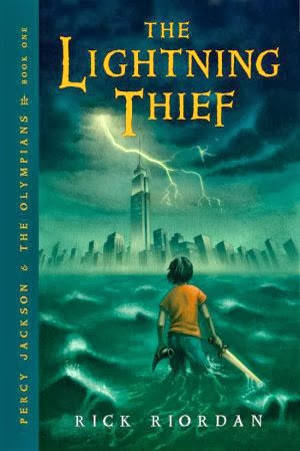
5. Percy Jackson and The Lightning Thief by Rick Riordan
Rick Riordan has been very prolific lately, and other series by him are big hits too; I would recommend to start with Percy though. 

6. Stories from Guys Write for Guys Read by Jon Scieszka & various authors
Part of a wonderful series edited by Jon Scieszka . . . so fuuny! Great to read out loud or to pass along to kids. They'll like some better than others. 

7. Sports memoirs/biographies
I can't really recommend a specific one, but for the majority of my middle grade reluctant reader male crowd, short nonfiction texts about their favorite sports stars are absolutely necessary. 

. . . And some favorites of mine--great middle grade books but not necessarily the top of the list for reluctant readers (although they have been successful):

8. Wonder by R.J. Palacio
A perspective changing story.

9. Flipped by Wendelin Van Draanen
Hilarious and heart warming. 

Any suggestions for other middle-grade reluctant reader winners?


Tuesday, January 14, 2014

STORIES SHAPE OUR MINDS (THE BRAIN + READING)

Thought I'd share this little article I read recently! We all know that reading is good for your brain, but in a study published in December, brain scans of people reading fiction show enhanced connectivity during reading and for a few days after.

"At a minimum, we can say that reading stories--especially those with strong narrative arcs--reconfigures brain networks for at least a few days. It shows how stories can stay with us. This may have profound implications for children and the role of reading in shaping their brains."

It's that last part that sticks with me:

profound implications for children and the role of reading in shaping their brains.

See the article via the Huffpost, here.

Monday, November 18, 2013

REVIEW: THE SMARTEST KIDS IN THE WORLD

The Smartest Kids in the World: And How They Got That Way by Amanda Ripley
My rating: 5 of 5 stars

Teachers, Administrators, Parents, Anyone Who Cares About Education: read this!

I really liked this book because I've seen a lot of the research and articles before as an educator. It's fairly common knowledge that the US is struggling with learning, especially when measured against other countries. While the facts were familiar, the insight that Ripley provided into not just our education system but other successful education systems worldwide was revelatory and sometimes unsettling.

Some might take issue with some of the things she says about American education (like when she calls some teachers "middling professionals" !! (but maybe true in some cases)), but while some parts might be a little loose,
some of the things she says are hard to hear because they are true. She does acknowledge that what works in other countries may not work in the US; we have more diversity and a different kind of government--but excuses like these are not going to be enough to stand on.
Ripley presents some lessons learned from other countries as achievable actions for US education:
      1-High expectations for students
      2-Raising the standards of teacher selection & education--but also giving teachers more autonomy
      3-Making tracks of gifted, vocational, remedial education available much later or not at all
      4-Tougher curriculum that has more depth than width
      5-Easing off spending on technology

It's hard for me just to review this book because I want so badly to discuss it's ideas! But I'll just say that Ripley has done some great storytelling and analyzing of the facts and ideas, and come up with something that is hopeful and informative. As a teacher, this sparked reflection on my own teaching practices, making me want to raise expectations and standards for my students and for myself, grading on results and really investing time and effort into an effective curriculum. I've seen the bored students, the students who could do more but don't feel that any more is expected of them, and I agree, things are at a turning point. This book adds something valuable and worthwhile to that discussion.

Thursday, October 10, 2013

IN CASE YOU NEED ANOTHER REASON TO READ: FOR BETTER SOCIAL SKILLS

This article from the New York Times gave me a little thrill this week. It reports on results of a study that find yet another reason reading is beneficial: reading literary fiction can draw on skills that improve social interaction. While it might be a little ironic to the antisocial bookworms that avid readers can sometimes be, you can't argue that it has some pretty important implications:

Making inferences is a skill that reluctant readers often lack, but fortunately that can be remedied by some literary fiction: "The researchers say the reason is that literary fiction often leaves more to the imagination, encouraging readers to make inferences about characters and be sensitive to emotional nuance and complexity."

". . . psychologists and other experts said the new study was powerful because it suggested a direct effect — quantifiable by measuring how many right and wrong answers people got on the tests — from reading literature for only a few minutes." Only a few minutes can seem temporary, but I think it's an argument for reading more often, even every day, for just a few minutes!

I'm glad that they also mentioned that educators should consider this study's findings, especially considering the heavy weight the new Common Core State Standards puts on nonfiction--which is very important!-- but obviously, so is literary fiction. 

Imagine the impact this can have on people who are looking to develop business, customer service, communication, or other skills for vocations in today's job market.  To be honest though, I just love the idea that literature has a way of creating a humanity that we can all share. 


Read the article here and the study here. 

Thursday, July 18, 2013

BOOK TRAILERS: GETTING EXCITED ABOUT A BOOK

I had some emails in response to the summer literacy tips post, specifically about getting excited about books-- so I thought I would share one of the most successful ways to get excited about a book. This applies to all readers, reluctant or not! 

Lots of readers spend a significant, although perhaps small, amount of time previewing books before they commit. Reluctant readers need to develop this skill because it will help them find books that are really interesting rather than starting a million different books that they don't find to their taste, then giving up and feeling discouraged about reading. One of the fastest and easiest ways to preview books is by watching videos! Book trailers are becoming more and more common, with publishers often creating a trailer for new releases to get readers excited and interested in their books. 


I also really enjoy video clips that provide a little more than a preview . . . a short summary of the book, especially for longer or more complex plots, really helps me understand what I'm reading and allows me to get invested in the story. There are more and more of these summary & preview clips popping up all over the place, from YouTube, book websites, and more. Some of my favorites are on the website Academic Earth, where the drawings in the videos are an entertaining way to get an overview of the book. I watched the Atlas Shrugged one the other day, and was grateful I did when the book came up in casual conversation . . . it's been a while since I've read that book (not to mention it's length can be an obstacle to remembering details . . .)! 

Book trailers and overviews, in video form, are one of the best ways to get interested in a book, especially for a generation of readers who are more inclined to watch a short video that is a couple of clicks away rather than read articles or lengthy book reviews. These videos are such a valuable tool! Do a web search on your book title + book trailer, and I'm sure you'll come up with a few options that can spark some book excitement! 

Tuesday, July 16, 2013

SUMMER LITERACY TIPS

It makes me sad when people say they haven't read a book all summer. Summer is one of the best times to read something! Read something fun! Here's a few ideas to get a reluctant reader reading something this summer:


Getting excited about a book is key, and an air conditioned bookstore (with treats from the cafe) can help stir up some excitement. Reluctant readers also respond well to choice, so letting them choose their own book can help a lot. Be encouraging, but also guide them a little to books they can handle. Short, action filled, or possible romance-centered books can be winners. Also look for books that are popular or best-sellers. They might have heard of them, or seen movies based on the book.

Have reading material available, just lying around when reluctant readers are looking for something to do. This doesn't just have to be books! Magazines go a long way too, especially ones on topics that are interesting to your reluctant reader--they'll be much more inclined to pick them up. And reading can happen anywhere--at the pool, in the car, the backyard, etc.

Try to not force anything on a reluctant reader. Pretty much every student at some point in their school career has been bombarded by summer reading lists, or been severely pressured to read during the summer. Make reading something fun by appealing to their interests. Maybe it's a biography on their favorite sports star, or graphic novels. Books that have been turned into movies or TV shows. Books that everyone is talking about. Whatever works, summertime is fun time and reading should be too!


Wednesday, July 3, 2013

READ, WHITE, & BLUE

A few patriotic picks for your 4th of July holiday:

by Nathaniel Philbrick

Like the blurb says, this book is about the " . . . Boston battle that ignited the American Revolution." Really, though, I can't wait to get this one because Philbrick is one amazing storyteller. I first became a fan after In the Heart of the Sea, and Bunker Hill is really being talked about. The detail and suspense that Philbrick endows these moments of history with are not to be missed. (Nonfiction)


Lone Survivor: The Eyewitness Account of Operation Redwing and the Lost Heroes of SEAL Team 10. 
by Marcus Luttrell

I listened to this on audio book and it was such an incredible, intense experience. Intense. He talks about how SEAL team members are selected and trained, and takes you through the play-by-play experience of Operation Redwing--the goal of which was to take out an al Qaeda leader in Taliban territory. This made me feel pride in our troops like never before. Plus, this book has really been a hit with reluctant readers of all ages--lots of teen readers, mostly boys, really find this book to be thrilling. Which, really, it is for any level of reader. (Nonfiction)


Eleanor & Park
by Rainbow Rowell

This one might not be as directly patriotic as the others, but I thought of it because it really provides a fun, interesting snapshot of America in a certain special decade (the 80s). It's just fun to read books that give you nostalgia for a decade, or if you weren't alive in that decade (I barely was)--you can laugh and learn about all the crazy things that American teenagers loved (Walkmans! Mix tapes! etc.) The story is about an unlikely couple--quirky Eleanor and quiet but strong Park. See my review here. (YA)

Tuesday, June 4, 2013

WHY FICTION IS DANGEROUS

Neil Gaiman shared a very interesting story at BEA last week, and an article I read via Shelf Awareness made me want to share it with you: 
Neil Gaiman: Why Fiction is Dangerous
"Fiction is dangerous because it lets you into other people's heads," Gaiman said. "It shows you that the world doesn't have to be like the one you live in." At the first nationally recognized science fiction convention in China in 2007, Gaiman took a party official aside and said, "While not actually illegal, science fiction is regarded as dangerous and subversive in China. Why did you say yes to a science-fiction convention?"
The party official answered, "In China, we're really good at making things people bring to us, but we don't invent, we don't innovate." When Chinese party officials visited Google, Apple and Microsoft, they asked what the executives read as children. The official continued: "They all said, 'We read science fiction. The world doesn't have to be the way it is right now. We can change it.' " "That," said Gaiman, "is the big dangerous thing." (by Jennifer M. Brown)

I never thought of fiction as being dangerous. But I like the connection between innovators and inventors and science fiction books. Seeing the world as something you can change. Reading science fiction--or really, any kind of fiction--can broaden your perspectives and make room for crazy, impossible things. 

Additionally, this story holds a powerful lesson for reluctant readers. Seeing examples of executives at recognizable brands such as Google, Apple, and Microsoft can help readers see that reading is part of being successful. Reading science fiction growing up was perhaps part of what helped those executives to become the great innovative and inventive (and extremely financially successful) people they are today. 

Science fiction, or even just fiction, or really--even just reading in general-- can be dangerous! It can also be lucrative, world-changing, mind-enlightening, perspective broadening, etc., etc. So here's a short selection of science fiction reads that are perfect for readers of all types--reluctant or not. 

Ender's Game
by Orson Scott Card
Desperately preparing for a defense against another attack from an alien race, Ender Wiggin is part of a school that develops children into battle generals and a new kind of soldier. This book is a classic, and a basis for a lot of other science fiction books. Plus it's going to be a movie soon! (Watch the trailer here)


The 5th Wave
by Rick Yancey
See my review here. 
Cassie is one of the survivors of the first four waves of alien attacks. She has to find her brother, and trusting no one is the name of the game until Evan Walker shows up. Meanwhile, Zombie does his best to lead Nugget and other kids as part of a defense against the 5th wave of attacks. But trust is often misplaced, or not given to those who deserve it. 


The Adoration of Jenna Fox
by Mary E. Pearson
Jenna Fox wakes up from a coma, remembering an accident that happened over a year ago. Things are different, and she has to figure out what is going on with herself. She begins to question those around her as well as her own identity, and confront things she never thought were possible in the area of bio-medicine and humanity. 


Across the Universe series
by Beth Revis
See my review here. 
Amy wakes up early from a frozen sleep aboard the spaceship Godspeed, and has to find out who it was that tried to wake her up--or kill her. Elder, the future leader of the ship, tries to help Amy in discovering the secret behind what is happening. 


Cinder
by Marissa Meyer
See my review here. 
It's a retelling of Cinderella, but there's much more that involves cyborgs as well as lots of juicy secrets and volatile diplomatic dynamics between a futuristic China and Lunar (a Moon kingdom). 


Insignia
by S.J. Kincaid
The earth is in the middle of WWIII, and it's natural resources are almost at an end. In a fight to gain access to resources elsewhere in the solar system, the 14 year old Tom Raines, with exceptional visual reality gaming skills, might be able to help.

Monday, May 27, 2013

Wednesday, May 8, 2013

REVIEW: BEAUTIFUL CREATURES (PLUS A QUICK NOTE FOR RELUCTANT READERS)

Beautiful Creatures by Kami Garcia
My rating: 1 of 5 stars


I read this because it's a hit with a lot of my older middle school & high school students, and hey! It's a movie! and I can see why a lot of them like it. There's a sense of the anxiety and rebelliousness against the lack of control you have over your life, which some people could relate to. There's also the "electrifying" feeling of first love, despite the outcast or popular nature of the girl or boy involved. The mysteriousness and secretive nature of one of those persons involved in the relationship. The annoying presence of irresponsible and obtuse adults. Sound a little familiar? These ever-present elements of paranormal YA are very much present in this book, but maybe that's why so many other readers like it.


There was plenty about the "Caster" (witch, essentially) aspect that felt original, and the setting in the South gave it a mysterious and slightly old-timey Gothic feel. However, the rest of the South-ness about it was so narrow minded and cliche, I could barely stand it. And Ethan sounded like a girl. This would have been so much better told from 3rd person perspective.

So I'm not a fan. But if you're into this genre, you might also like Hush Hush, Shiver (The Wolves of Mercy Falls series), Evermore, Fallen, . . . And here's a quick, IMPORTANT note on these: even though they're not my personal preferred reading, I really enjoy the fact that they have enough appeal to some reluctant readers to get them into reading. Sure, they're not reading highest quality stuff, but getting into these books, and their innumerable sequels, actually is a fabulous gateway into other (perhaps better) books. So while I might not rank them very high, they do have an important place on the shelf, particularly for reluctant readers.

Wednesday, April 17, 2013

LITERACY LINKS 01

This first Literacy Links is basically a hot list for my main literacy resources--the websites that have some quality book resources (lists, recommendations, etc) as well as quality literacy & reader resources (tips, research, etc).

Goodreads
Kind of like Facebook--but much better because it's all about books. You can friend your friends and see what they're reading, or follow people (including authors!) that read books you like. This is probably the number one way I find books to read. Lists on lists on lists, ratings, and reviews are some of the best parts of the site, and there's lots of other fun content too.


Guys Read
 Great because of the resources, but also because we share a core belief: that anyone will read if it's something that interests them.


YALSA (Young Adult Library Services Association)
Plenty of literacy tips & book lists to be found here; take a look at these tips for readers. Plus, their Teen Book Finder app is kind of fun to play around on.


Teen Reads
Great for giveaways and reviews. I really love & use this website for the book lists though, especially the Ultimate Reading List, Cool & New books, and Adult Books You Want To Read.


YABC (Young Adult Books Central)
Very current new releases and reviews. You can contribute by writing your own reviews.


Novel Novice
A website akin to this one . . . promotes reading & explores YA books, as well as some wonderfully curated lists of middle grade lit and a mind for literacy and writing.


Bookish

A book recommendation engine that I love for it's exclusives. The recommendation engine is good too, as are the book lists. One of my favorite sites just to look around on.


SMART (Start Making A Reader Today)
An Oregon based reading initiative, but has lots of good articles, tips, and research on early childhood literacy that can translate to adolescent and adult literacy. You have to check out the Reading Is Critical Infograph. 

Friday, March 8, 2013

WEEKEND LINKS 010


Source: imgur.com

Some of the best places to be if you love books. 


Some bookstore love. (via Huffpost books) 

The art of browsing . . . more bookstore love. (via Random House)

Have you read Ender's Game? (It's a classic, come on people.) See some snapshots of the coming-soon movie! I had to post this in part because of my love for the book, and in part because I'm a Hailee Steinfeld fan. She'll be great as Petra, don't you think?

Thursday, March 7, 2013

CAN YOU SELL READING? PART 2


See Part 1 of this post here. Continuing with ideas from Section 2, How to Be:

Framing information: seeing/finding problems, curating information, asking questions. SO important in our day of information overload. And especially applicable to reading! A few useful frames:  Experience frame (try suggesting a book in terms of the experience you have when reading it. As in, WOW! This book gave me the shivers the whole time, and even though it was so haunting and horrifying I couldn't put it down! One of the great joys of reading is the experience of it, and playing that up will attract people to reading), and the Label frame (positive/negative labels affect behavior; don't ever label someone as a "non-reader". This can have a HUGE effect on their reading!).

"Clarity on how to think without clarity on how to act can leave people unmoved." (142) Sell that book/reading all you want, but make sure you have the goods (books) right there to put into their hands. Take kids to bookstores. Or the library. Go.

Section 3
"How to Do". Here, I handpicked a few of the ideas that I think had the most application to selling reading.

Pitch: a Rhyming pitch works well because of how our brains work (Helpful when learning how to read or learning reading strategies. Makes it more fun too). A Subject Line pitch should (according to research) "be either obviously useful or mysteriously intriguing, but probably not both" (167). I can think of any number of books that I read based on recommendations that made the book seem imminently useful, or mysteriously intriguing. So when trying to push a book on someone, that might come in handy to remember.

Serve: "We do better when we move beyond solving a puzzle to serving a person" (212). This reminds me that ultimately, I want someone's life to be better because of something that they read. That's one of the best things about reading, right? To come away a better, changed person? So rather than think of literacy and reading as a do-or-die skill (which really, it is), maybe we would be able to sell someone on reading or on a particular book if we remember, and emphasize, that they will be better off having that powerful, wonderful experience of reading.

Have you read this book yet? What did you think?

Wednesday, March 6, 2013

CAN YOU SELL READING? REVIEW: TO SELL IS HUMAN (PART 1)

So, I don't read YA lit all the time, you guys. I venture, quite frequently actually, into nonfiction. I wanted to review this book on Enjoy A Book because I feel like a lot of the ideas in here are applicable to my main cause: literacy and the love of reading. So the ideas that I mention below are from To Sell Is Human, but are remarkably transformative when you think about them in terms of reading, getting someone to read, or really--selling reading. This book really pointed out some fabulous things about living and working in today's world. It's a world of sales! Not too surprising, when you think about it, as practically all of us do things to get other people to buy into what we've got, but this book presents some memorable ideas.

Section 1
This book was divided into 3 parts: "Rebirth of a Salesman", "How to Be" and "How to Do". The first section, "Rebirth of a Salesman", took me the longest to get through, because early on I bought into the idea that we are all in sales of one kind or another, so I felt like this section spent a little too much time trying to sell the reader on that idea. However, he did effectively point out that sales are different nowadays--not only because everyone from teachers to medical professionals are "selling", but because everyone has access to information that affect the sale, where previously only few had that information (information asymmetry).

 One other thing in this section I found valuable was the idea of "moving people." The author interviews Ferlazzo, an educator, who helps brings to light a crucial  aspect of present day sales, "The challenge is that to move people a large distance and for the long term, we have to create the conditions where they can move themselves." He also shares another gem: "It means trying to elicit from people what their goals are for themselves and having the flexibility to frame what we do in that context." Ferlazzo then goes on to use this genius concept to move one of his students to write essays, when the student had never written one before in many years of schooling. This is where the power of this book lies for me: in the idea of moving people--using their own goals and interests and framing/creating conditions or a context for them to move themselves. In this idea, "selling" someone can lead to them moving themselves. How important is this in reading?! You don't want reading to be a one-time sale, but rather a sale that starts them moving in a permanent, literate direction!

Section 2
"How to Be" had a number of valuable ideas. Part of the value of this book is when the author provides "sample cases" after each chapter on how to apply those concepts. There's a ton of great stuff in there too, but for sake of brevity and because you'll get more out of it if you read the book for yourself, I only want to highlight some of the ideas he presents, especially the ones that apply to reading and literacy. Here's a few for you:

Perspective-takers do better. Use this when you're selling reading by understanding what that person's interests are, and cater your reading suggestions to them. They're more likely to enjoy reading and come back for more.

Interrogative self talk (asking questions) is the most effective. The author framed this in the context of making a sale or getting ready for a pitch, but I found the other way to be the most useful: in terms of evaluating yourself. This is a great reading strategy for comprehension. I suppose if you want to stretch it to apply to buoyancy (like it was in the book), then you could say that it would help a reader keep going if they're struggling with a text. This interrogative self-talk is especially useful, like the book points out, because it gives the person using it reasons or ways to complete things, rather than momentary, fleeting statements of positive or negative self-talk.

Positive emotions broaden perspectives, lead to creativity, and can be contagious!So while this might apply more tangentially to the selling of reading, I believe that all of those things still play a part in a good reading experience. I felt like this idea was one of the best in this chapter.

The "mindset" idea applies to sales too! Ok, so the author didn't label it as "mindset" or use those terms, but have you read that book? Basically the idea is to not think of things in a "fixed" mindset--because then you'll have a hard time dealing with failures and will usually see yourself and other things as set, or permanent. A "growth" mindset is better because you can deal with setbacks, learn, and become better. Very applicable to sales, because everyone faces rejection and failure. So don't take things personally. If you're reading a book you don't like, it's ok to move on and not get hung up on finishing it. Or if you're struggling with reading, you need to be able to struggle (lots of good readers face text that challenges them!) and progress.

Don't worry, I know how to count to 3! Come back tomorrow for the second and final part of this post! Some great gems of ideas for selling reading! 

Thursday, February 28, 2013

SHORT LIST 01 FOR RELUCTANT READERS

Presenting the first Short List! Check out some of these books that I hand picked for reluctant readers. Not a reluctant reader? You'll enjoy them anyway!

And remember, when finding a book for the reluctant reader it's best to go for a book on their reading level that will deliver a powerful reading experience. That's what we're going for here-- the experience of reading! You know-- that I'm hooked and can't put it down, just finished and still thinking about it, now I want another--kind of reading experience. If you're going to attain that, a book has to be fairly close to the target reader's reading level. If it's too hard (even if it delivers a whopper of a reading experience) than the reluctant reader won't get into enough to enjoy it. So build up the positive reading experiences with books close to their level, then as their reading muscles get stronger you can give them a greater variety of books.

You wouldn't go weightlifting as a beginner and start with lots of weight, would you? Nope. Hopefully some of these books fit the reading level of your intended reluctant reader, and if not, I always take requests! With that being said, here's Short List 01 for The Reluctant Reader:

You by Charles Benoit
This is a fairly short, direct novel that will greatly appeal to boys. The main character, Kyle, tells the story of how he ended up in a rather terrible spot: somewhere he shouldn't be at a times he shouldn't be there, surrounded by shattered glass and blood. Told expertly in 2nd person, Kyle's story really gets you in his head, and to the point that you are understanding and sympathetic to his choices and his fate. Like I said, this would have great success with a boy audience, but I wouldn't hesitate giving it to girls either. (910 Lexile)


Thirteen Reasons Why by Jay Asher
This book will provide a powerful reading experience--it's emotion packed and the action gets deeper and deeper the more you read, and you'll be sucked in, guaranteed. Definitely better for a girl audience, it's about a girl who leaves 13 tapes behind . . . 13 tapes for 13 people with 13 reasons why she couldn't stand living anymore. It's really a thought-provoking book with everyday drama that people can relate to-- even as it escalates. (550 Lexile)


Cinder by Marissa Meyer 
Click here for my review.
At a 790 Lexile level, this book will do great with lower level readers looking for a good time. It's a retelling of Cinderella, but there's much more that involves cyborgs as well as lots of juicy secrets and volatile diplomatic dynamics between a futuristic China and Lunar (a Moon kingdom). Perfect for readers who like manga/anime type stuff, or for readers who like fantasy. But I'm neither of those, and I still really liked this book. Bonus: it's a series so if that reluctant reader likes this one, they'll probably get hooked on the rest of them! 

Friday, February 15, 2013

WEEKEND LINKS 08


Sharing some reading & literacy love this week: 

Spreading the reading love: Raising A Reader foundation--how sweet is this? 

Love this: things you didn't know/remember about some classics. (via BookRiot)

Literacy: get 'em when they're young, and stuff them full of words.  (via NCTE)


Wednesday, February 6, 2013

DOES AGE MATCH READING LEVEL?


Going from BSC to HP. Are you ready for this? (Is it just me or do all the kids on BSC book covers look so much older?)

I recently read an article on The New York Times "Room for Debate" section on what books are ok for young readers to read. I couldn't help but add my own thoughts . . . (click here for article) 

Were you the kind of reader growing up that only read books that interested you? Or were you the kind of reader that read pretty much everything? I was that kind of reader, and because of that, I read everything I could get my greedy little hands on, including books that I wasn't ready for.

I remember reading a lot of adult books when I was young; I was a good reader. But that doesn't mean I was ready for what?! a rape scene that I read in an adult book I found laying around the house?! At first I was unsure of where the action of the book was leading, but once I realized what in the world was going on I felt disgusted, uncomfortable, and unsure for a long time after. It stuck with me--in a bad, traumatizing way. That didn't make me stop reading (let's be real, it would take a lot more than that!), but I stuck with books that were safe for a while (thus my entire yellow hardcover Nancy Drew collection), fearing to take those reading risks--that often pay off--because I dreaded an encounter with something like that again.

Because of that experience, I have a difficult time agreeing that kids are good "self-censors" and that they will just skim over parts that they don't really understand. Not true! Proficient reading skills or just curiosity can lead to traumatic experiences with material that kids aren't ready for. But at the same time, it's hard to say definitively at which age kids get to read which books. It's hard because every kid is different. Different in their maturity levels, world knowledge, emotional readiness, and in their own interests.

So I think this: Parents- you should read what they're reading. Or, if you have a hard time condescending yourself to read such books that your maturity level surpasses, read "side by side" with your kids. Ask them what they're reading, talk about characters/issues in the book, and be interested in what they read. Yes, they'll probably gravitate towards things they're interested in, but even then reading side by side with them can't hurt.

With that being said, I don't think you should underestimate exposure to new ideas and cultures that reading brings. Reading opens eyes and minds and won't cost you travel expenses or force you to live through sketchy experiences to gain that worldly knowledge. Yes, young readers may not understand enough to get all of it though--literature is a good place to be able to examine morality and ethics, but that chance might be missed if a book is read too soon. But don't rush to rip a book out of a reader's hands (horror!), rather talk about it with them and make those eye-opening, breathtaking, world-view-expanding experiences available through books.

What do you think?

Saturday, February 2, 2013

WEEKEND LINKS 06


I didn't realize this until just now, but do you see a pattern with these links? Ha ha, I guess literacy must have been on my mind this week! 

What Is Literacy? First 3 National Ambassadors for Young People's Literature Answer (J Scieszka K Paterson WD Myers) (via NCTE)

Why we should memorize . . .  (via pageturner)

Ten ways to encourage kids to read  (via Random House)

Official 2013 Youth Media Award Winners list (via ALA Library) <<<<<< definitely add some of these to your TBR pile if you haven't already!! I'm currently working on the Printz, In Darkness.  

10 Beautiful Ways to Decorate with Books (via Simon Schuster)